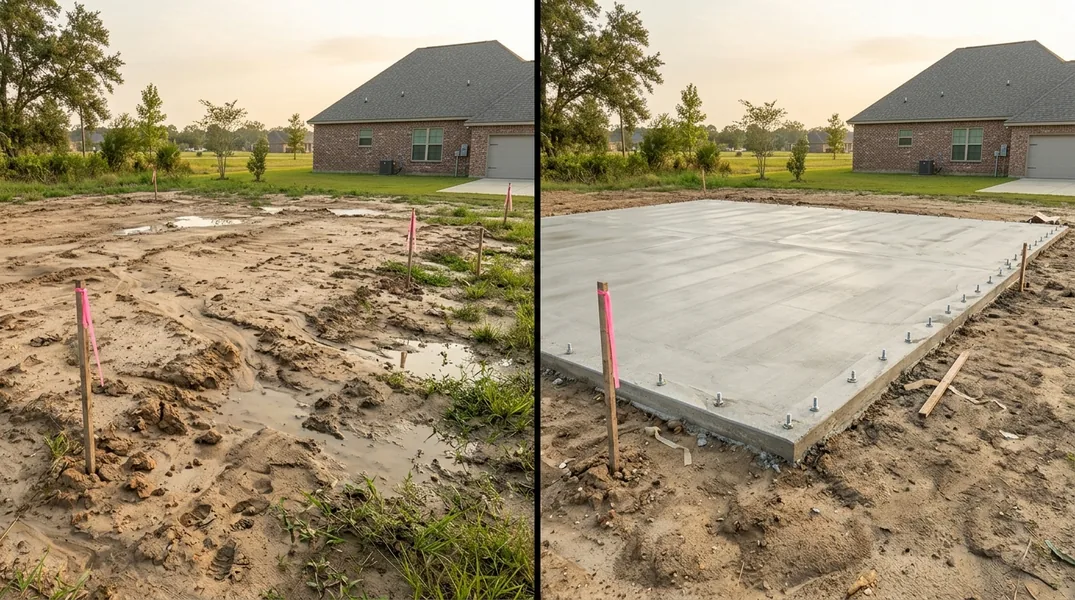
Why the Concrete Slab Matters More Than You Think
When you're buying a new construction home in Lafayette, the excitement of a fresh start can overshadow some critical inspections. One element that deserves your full attention is the concrete slab foundation. Unlike older homes with basements or crawl spaces, most new construction in South Louisiana relies on concrete slabs poured directly on grade. This foundation type is economical and practical for our region's climate, but it requires careful evaluation before you sign closing documents.
The concrete slab is quite literally the base of your entire home. It supports the weight of your walls, roof, and everything inside. Poor slab construction, improper drainage, or settling issues can lead to expensive repairs down the road, including foundation cracks, interior wall damage, and even structural concerns. Taking time to understand what builders should deliver and what you should inspect will protect your investment and give you peace of mind in your new home.
Understanding New Construction Concrete Slab Drainage in Lafayette
Lafayette sits in a region with high water tables and frequent rainfall. Proper drainage around a new construction concrete slab is absolutely essential. When builders pour a slab, they should install a gravel base, a vapor barrier, and perimeter drainage systems designed to direct water away from the foundation. Without these layers, water can pool beneath or around the slab, causing hydrostatic pressure that leads to cracks, moisture intrusion, and mold growth.
Before closing, ask your builder for documentation showing the drainage plan. Walk the perimeter of the home and look for grading that slopes away from the foundation. The ground should fall away at least six inches over the first ten feet. Check whether downspouts from gutters are extended at least four to six feet away from the slab. In Lafayette's climate, poor drainage isn't just a minor issue; it's a foundation threat that can cost tens of thousands to remediate. If you notice low spots, pooling water, or grading that slopes toward the house, request corrective action before closing.
Builder Foundation Inspection: What You Need to Check
A builder foundation inspection is one of the most important steps in the new home purchase process. Ideally, hire a licensed structural engineer or a thorough home inspector who specializes in foundations to examine the slab before closing. They'll look for cracks, uneven surfaces, and signs of settling. Some minor hairline cracks are normal in concrete, but wider cracks (more than 1/8 inch) or cracks that follow a pattern may indicate structural problems or poor concrete quality.
During the inspection, check for evidence of moisture damage inside the home. Look at baseboards, subflooring, and crawl spaces for discoloration or mold. Test the concrete surface with a moisture meter if available. Ask the inspector to verify that the slab is level or has only minimal slope. Significant slopes or high spots can indicate settling, which may worsen over time. Don't skip this step because builders typically offer limited warranties on slab defects, and once you close, you own any problems that emerge.
Common Slab Issues to Watch for in New Builds
Several problems commonly appear in new construction slabs, especially in Louisiana's challenging environment. Concrete shrinkage cracks develop as the concrete cures and are usually cosmetic, but wider structural cracks warrant concern. Efflorescence, a white powdery substance on the slab surface, indicates moisture movement through the concrete. While not immediately dangerous, it signals that water is present and the vapor barrier may not be performing optimally.
Settlement cracks occur when the soil beneath the slab compacts unevenly or when fill material wasn't properly compacted before pouring. These cracks often start at corners or along walls and may continue to widen over months or years. Heaving, the opposite problem, occurs when soil expands due to moisture or frost, pushing the slab upward. Louisiana's wet climate makes heaving less common than settlement, but it can still happen. Spalling, where the concrete surface flakes or deteriorates, suggests poor concrete mix, improper finishing, or water damage. Any of these issues should be documented and addressed by the builder before you take ownership.
Asking the Right Questions Before Closing
Don't hesitate to ask your builder detailed questions about the slab. Request copies of the concrete testing reports, which verify that the concrete met strength specifications. Ask what concrete mix was used, the PSI rating, and whether any additives were included for durability or water resistance. Find out who performed the concrete work and whether they carry liability insurance. Ask about the vapor barrier type and whether it meets current building codes. These questions show you're serious about quality and often prompt builders to ensure their work is solid.
Request documentation of soil testing and compaction reports. Builders should have tested the soil before pouring to ensure it's suitable for a concrete slab. Ask about the gravel base depth and composition. In Lafayette, a typical base should be four to six inches of compacted gravel. Inquire about the builder's warranty on the slab and get it in writing. Most builders offer one-year structural warranties, but terms vary. Understanding what's covered and for how long protects you if problems emerge shortly after closing.
What to Do If You Discover Slab Problems After Closing
If you discover slab defects after closing, document everything with photos and written descriptions. Contact the builder immediately and file a claim under any remaining warranty. Many builders will make repairs within the warranty period, but you must report issues promptly. If the builder refuses to act or if the warranty has expired, you may need to hire a structural engineer to assess the damage and recommend repairs.
For significant repairs, you'll likely need professional concrete work. Concrete Repair & Resurfacing specialists can assess cracks, address drainage issues, and restore the slab's integrity. If you're in the Lafayette area and discover foundation problems, Lafayette Concrete can provide expert evaluation and repair solutions. Reach out to Lafayette Concrete at (337) 273-0928 or request a free estimate to explore your options. Addressing slab problems early prevents them from worsening and protects your home's long-term value.
Looking for a professional concrete contractor in Lafayette? Lafayette Concrete responds fast for all your concrete needs.
Get a Free QuoteOur services: Concrete Driveways · Concrete Patios · Stamped & Decorative Concrete